
THE LAZY WOMEN COLLECTIVE
Double-click to edit...
Can women ever allow themselves to be “lazy”? Here’s how a group of young women from Central and Eastern Europe are shedding light on gender stereotypes and challenging productivity culture.
-by Zsofi Borsi
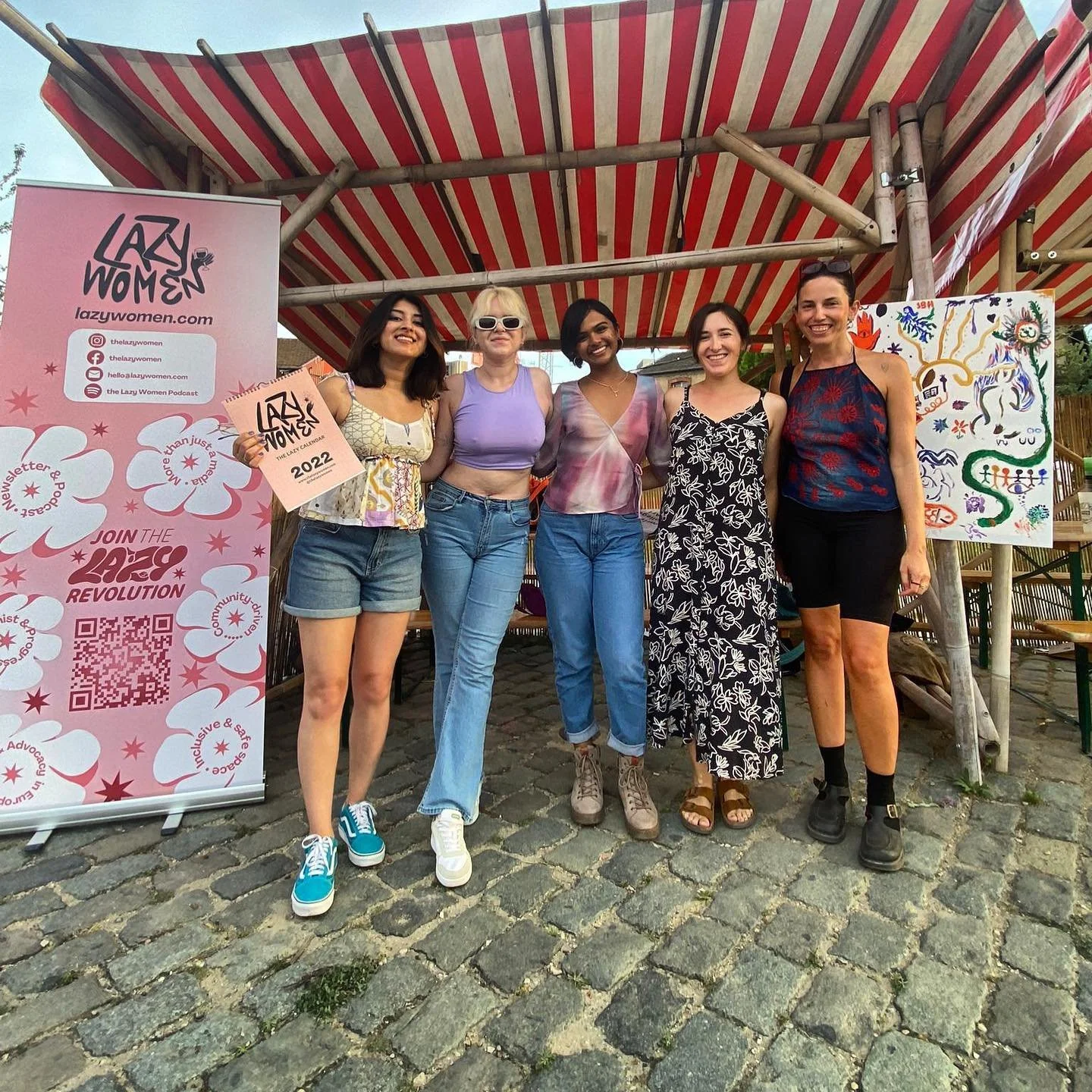
2020: lockdown. A group of international students finds themselves stuck together in a flat in Budapest, Hungary. The university for which they all came, Central European University, has just been kicked out of the country, and they are the very last cohort to stay. Gender studies were banned earlier that year; the Orbán government’s war on gender has just begun. The political motive to speak up is clearly there, but it’s only when one woman’s personal frustrations align with the socio-political context that things are quickly set in motion. A boyfriend who calls her lazy is the last straw —and Lazy Women comes to life.
What starts out as an experimental blog featuring articles and illustrations from international students soon turns into something bigger. Constrained in their home, for many women, the boundaries of private and public evaporate; the limitations imposed on them by society suddenly all too clear. Lazy Women offers a safe haven in the midst of it all, for many, the only place where they don’t have to perform or fit into a pre-moulded societal role.
Who are you when you’re not taking care of others or being overly mindful of their needs? A question that many of us face for the first time in our adult lives, and try to make sense of it through the means of unbounded creativity.
For the big majority of the folks who join us, this is the only space where they can freely express their everyday struggles, whether it’s their progressive beliefs, desire to emancipate themselves from an abusive relationship, or simply allow themselves to think about “taboo” topics such as period pain, reproductive rights, or Queerness. For a more liberal Western audience, these might seem like fights already fought and won, but not where we come from. Pervasive gender stereotypes and “traditional values” mobilised by political propaganda, all too prevalent in our local contexts, mean that most of the newly joined Lazies are even scared to call themselves a “feminist”, not to mention public activism. So we scale it back, start subtle. Through the testimony-style articles we publish, we show that they are not alone, that what they are going through is part of a larger struggle.
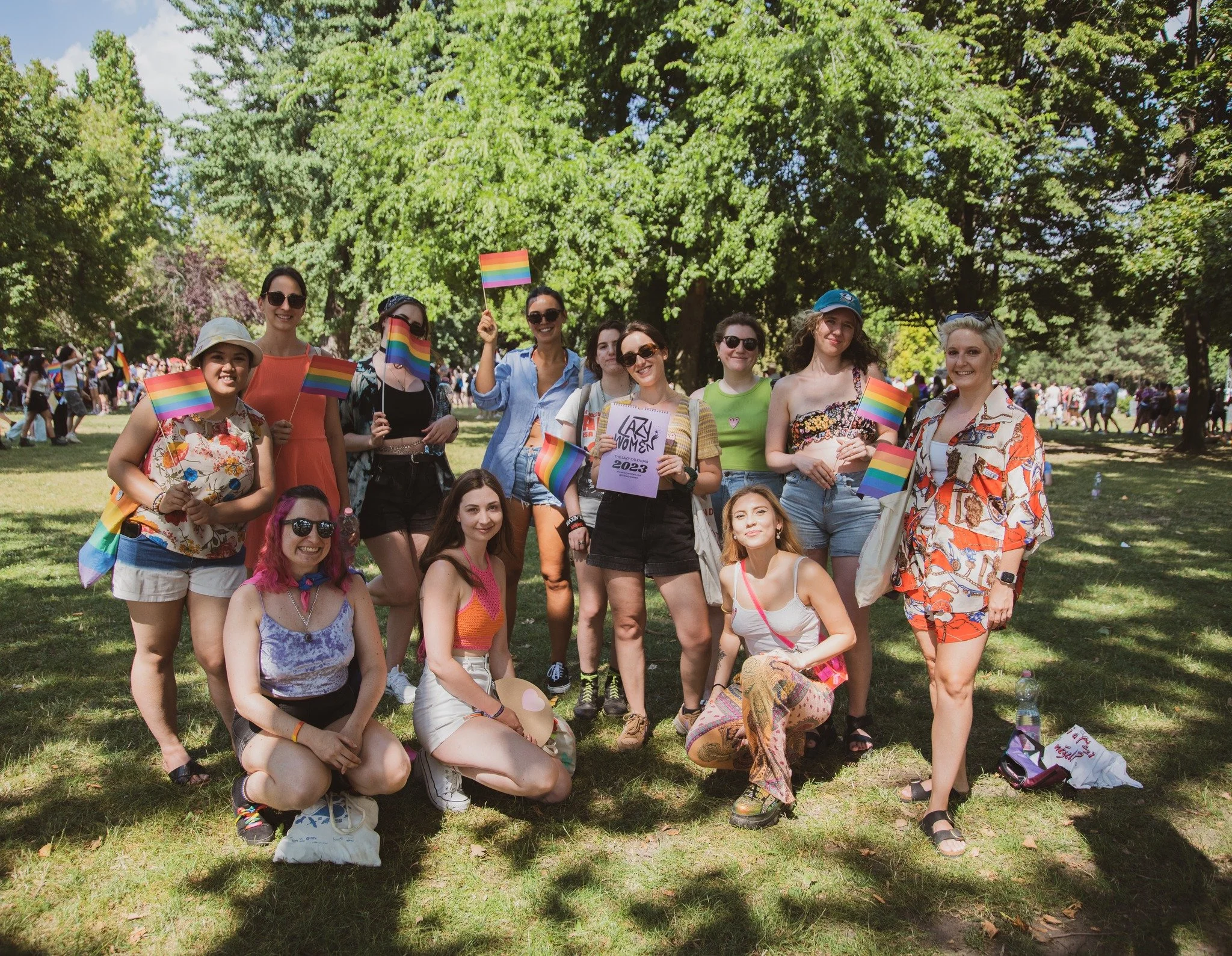
“The personal is political” becomes Lazy Women’s defining motto.
The idea of Lazy Women thus solidifies: a fully open, non-judgemental, multinational, virtual space, where everyone, regardless of background or professional experience, can express their frustration with the system through publishing personal artwork, poetry, written testimonies and more. A creative playground and a caring community, striving to politicise subjects that have been for too long cast aside as “too personal” or simply just “women’s issues”.
Today, Lazy Women is not just an association and a media platform; it is a global movement. Since its creation in 2020, the collective has grown from a blog into a full-scale volunteer-run feminist media outlet and a creative hub with over 50 volunteers from around the world, but especially from Central and Eastern Europe. It has nurtured a community of talented writers, podcasters, and illustrators, many of whom had no previous media experience and/or came from disadvantaged geographical or societal backgrounds. Together, we have created thought-provoking content that challenges the norms, disrupts stereotypes, and inspires change.
To remain afloat as an entity that actively defies productivist-capitalist practices and one that doesn’t want to be put in the often narrow box of what a media platform can look like, is an ongoing challenge. We strongly oppose any form of monetisation that could potentially interfere with our independence, and refuse to locate ourselves in any—typically Western —scale of what feminist activism can constitute. We don’t work with strict deadlines, and prioritise the quality of the process over the speed of a finished product. The roles that members take on are based on a personal sense of responsibility rather than formal titles; and almost none of us come from a professional journalistic background. We find ourselves having to explain who and what we are over and over again, proving our worth in a media landscape that gatekeeps, that we are capable of publishing professional content, all while staying true to our core values.
The world is only now waking up to how valuable knowledge and political experience from post-Soviet Europe can be, and that it should have listened to them much sooner. It’s in this current context that our everyday struggle continues to make women’s and marginalised groups’ voices heard and their personal—yet political—stories visible. The Lazy Women are here to stay.
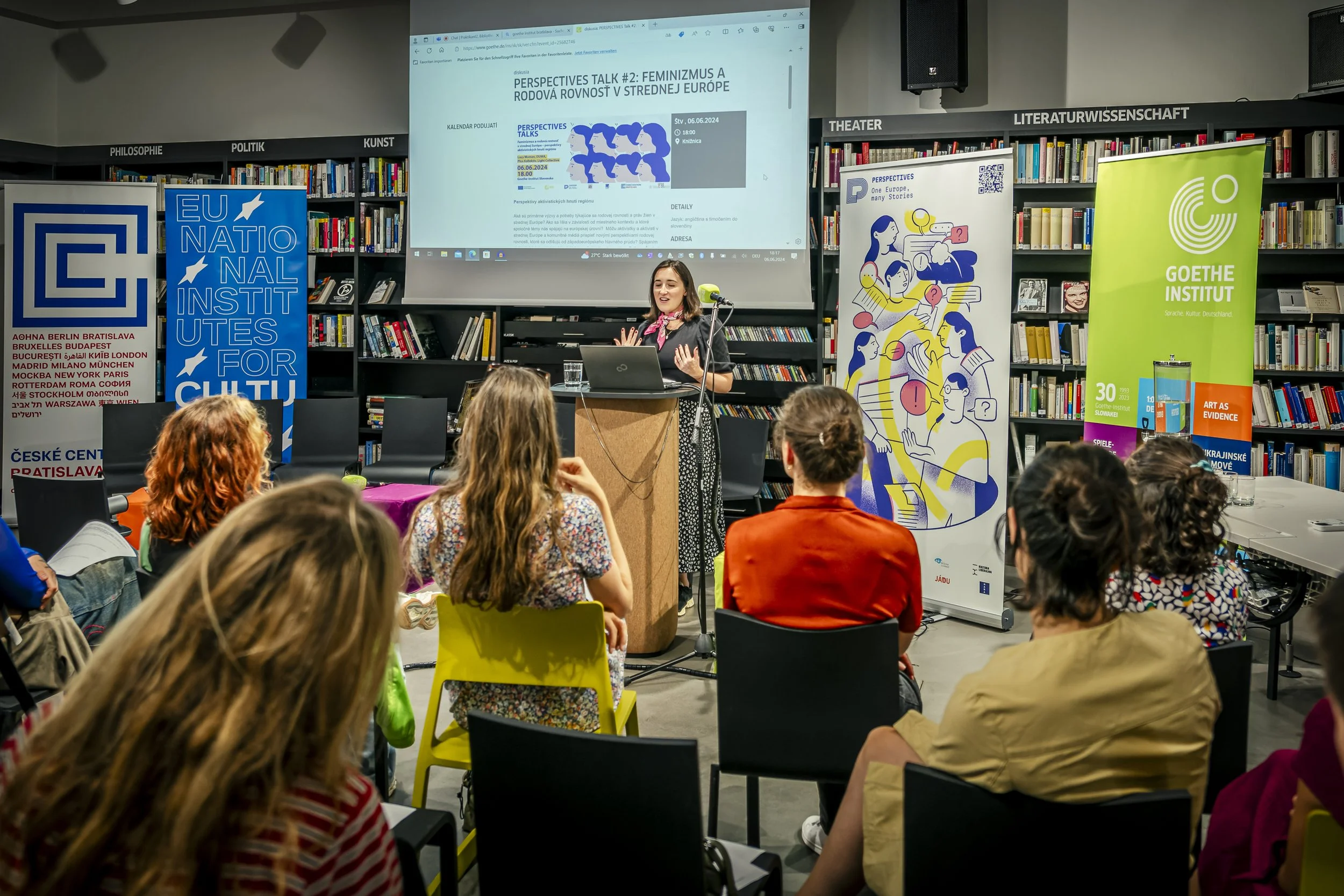
Originally from Budapest, Zsofi Borsi is a writer and editor based in Paris. During her studies in Politics at Durham University (UK) and Central European University (Vienna), she developed a keen interest in bottom-up social movements. She has previously worked as an intern at the European Commission, reporting on the rule of law in Hungary and for the Hungarian opposition in municipal politics. As the founder of Lazy Women, she facilitated workshops about feminist grassroots movement organising in France (La Gaîté Lyrique), Budapest (Finnish Institute), Prishtina (K2.0), and Bratislava (Goethe Institut).