“ENTSCHULDIGUNG, SPRECHEN SIE ENGLISCH?”
Double-click to edit...
-by Frida Robles Ponce
I don’t know how many times I have asked this question and every time I enunciate it, a fear sets in the upper side of my stomach, a consciousness of my bad pronunciation, the anxiety for how it will be perceived by the person on the other side of the conversation. Most times, I utter this question on the phone when I need to book a doctor’s appointment, or ask about bureaucratic processes or the like. I get almost ecstatic when someone replies, “Of course, how can I help you?” Wow, bingo! Many times—more often than not—the answer is “nur ein bischen” with almost a grunt. Or the dreadful “nein”. The reminder is there, I live in a country where I don’t speak the language.
My daily resistance is German.
Resistance as found in the Cambridge Dictionary:
__ the act of fighting against something that is attacking you, or refusing to accept something
__ a force that acts to stop the progress of something or make it slower
__ the degree to which a substance prevents the flow of an electric current through it
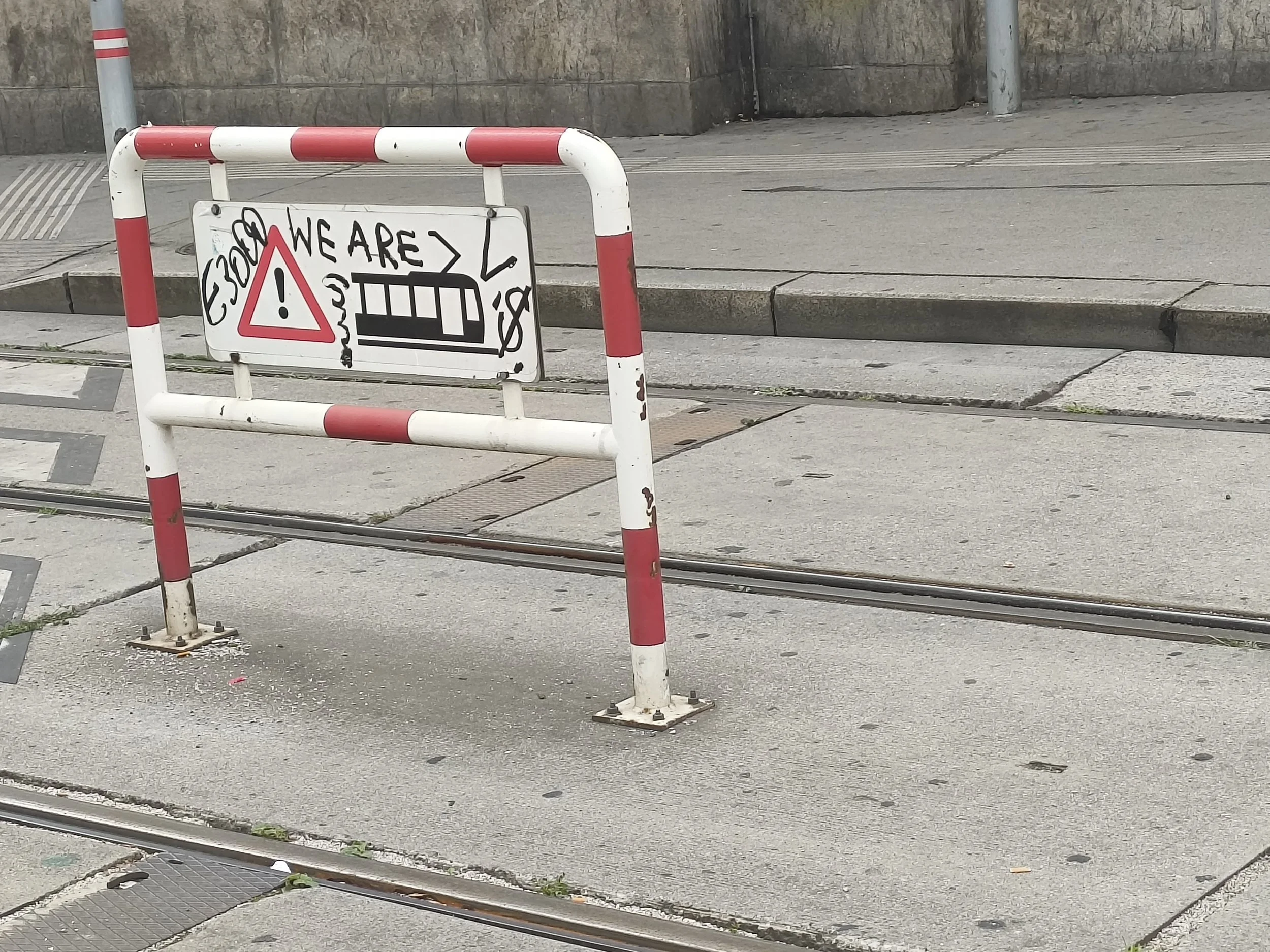
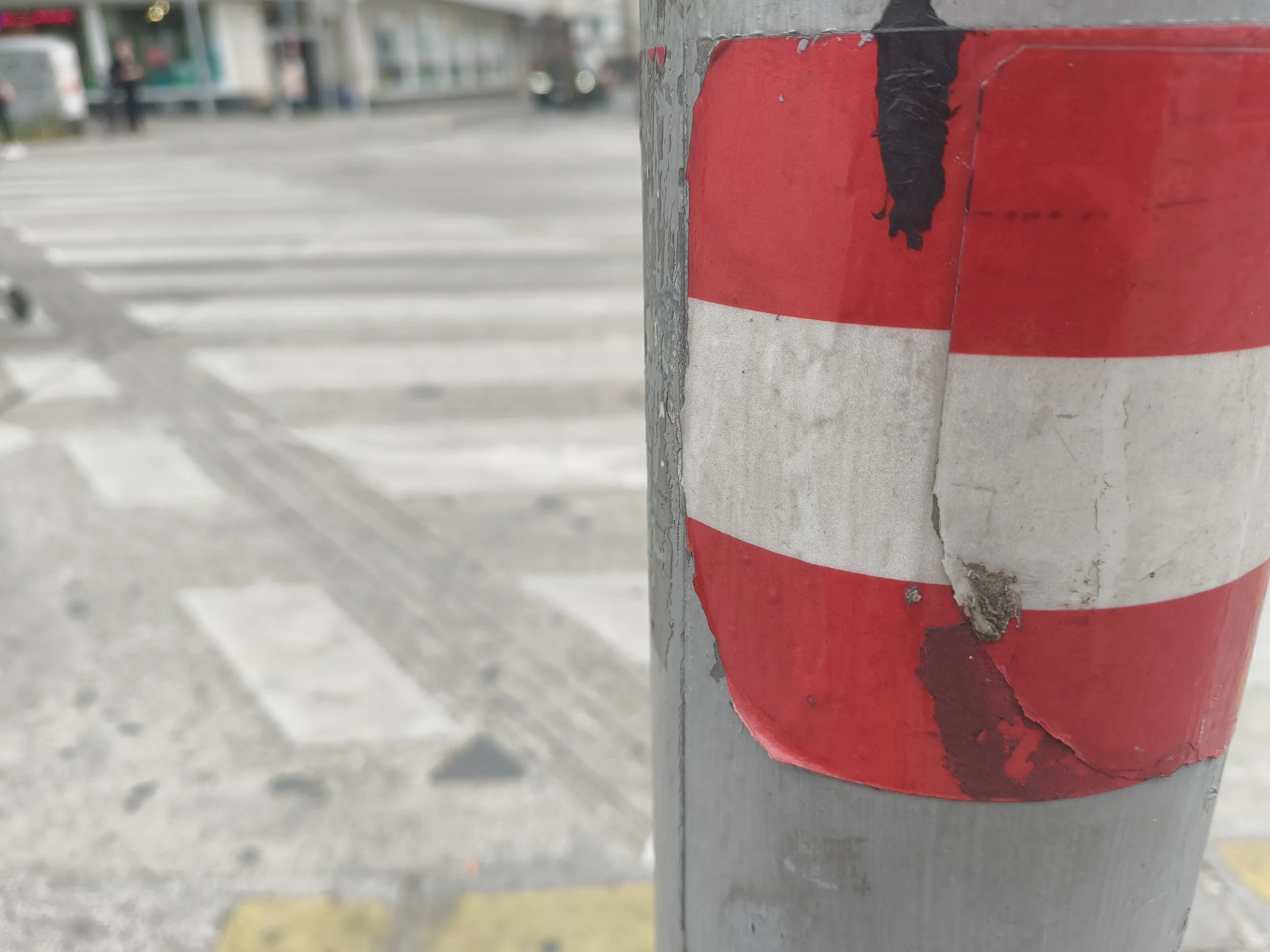
Is German attacking me? I doubt it. Is German comparable to a flow of an electric current? Perhaps. Am I stopping or slowing down my learning of the language? Most definitely. I refuse German almost as a force, as a shield, as a fight, as a daily activity and I want to convince myself that it is due to something deeper than laziness or mere stupidity (which I don’t dismiss, of course!).
“Bitte steigen Sie aus” “Auf Wiedersehen“. In my world, the German language is an almost mechanical PA language that persists in my surroundings but doesn’t fully touch me. I can even hear the PA of the subway station from my room, “Bitte steigen Sie aus”. I am in Vienna, people speak German, I don’t. I don’t understand what people are talking about in the streets, in the cafes, in the tram. Not that there is that much talking, coming from Mexico City, Vienna feels awfully quiet. One should not speak in the tram, one should not smile at strangers, one should not stare into the other’s eyes. Respect the private space of the other, the boundaries, the duty of boundaries. We are all individuals here, did you forget? How could I forget, but I do not speak the language; I don’t fully understand the rules. I prefer not to know, I prefer not to understand, I prefer not to…
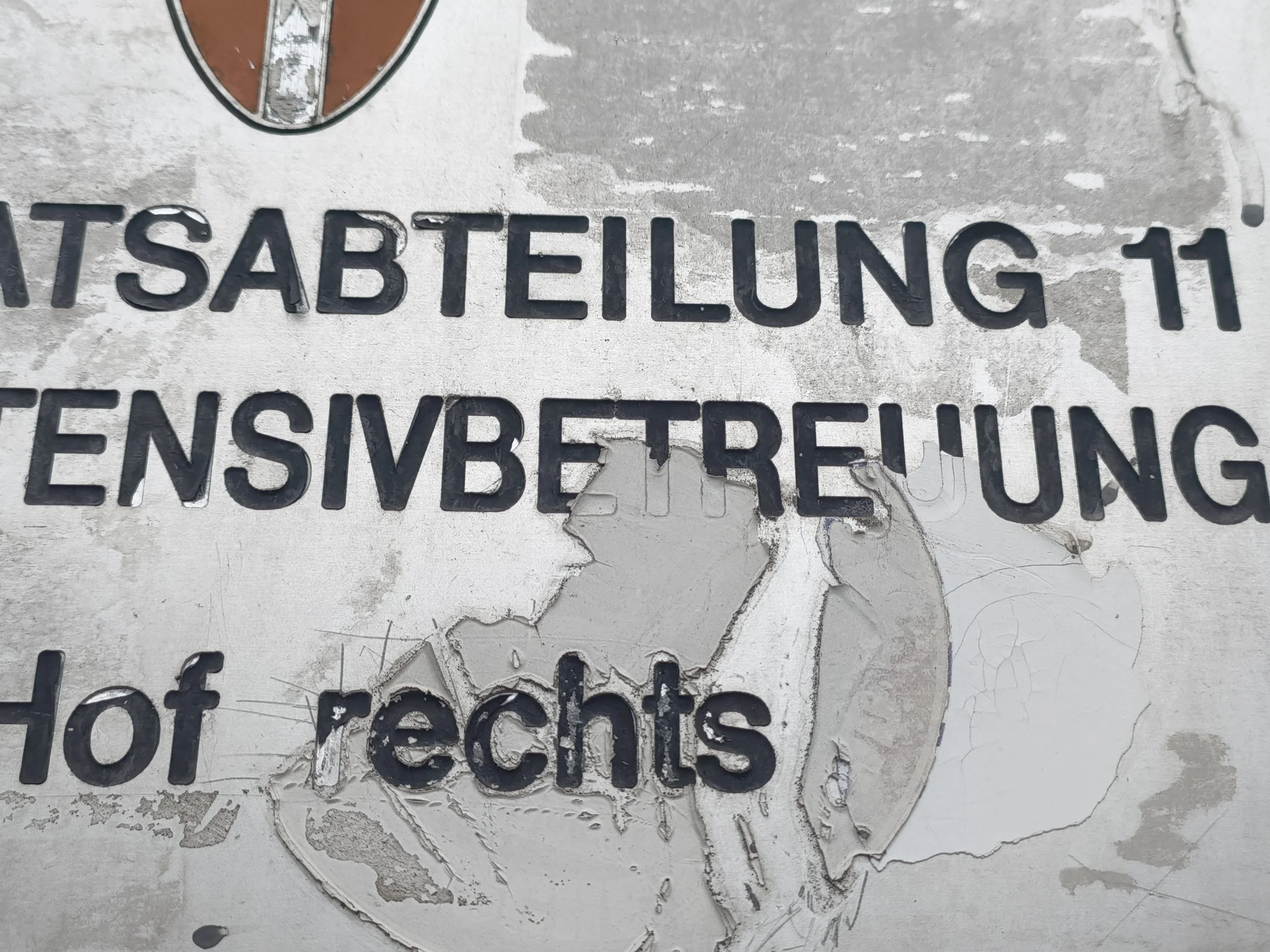
What does it mean to live in a country you do not understand? To survive in such a context? To find jobs and pay the rent and have dinners with friends in that limbo-like state? To achieve professional “successes”, to cry, to be sick, within the limits of a language that you do not understand. To be listed on registries populated with unintelligible words and your name and your age and the name of your parents and the place you were born. Mexiko with a K. Mexiko Platz. Would my life be better if I stopped this resistance? If I integrated more, if I—like my aunt insists—would then live a “full life”?
I live in broken English. Broken English has become my religion.
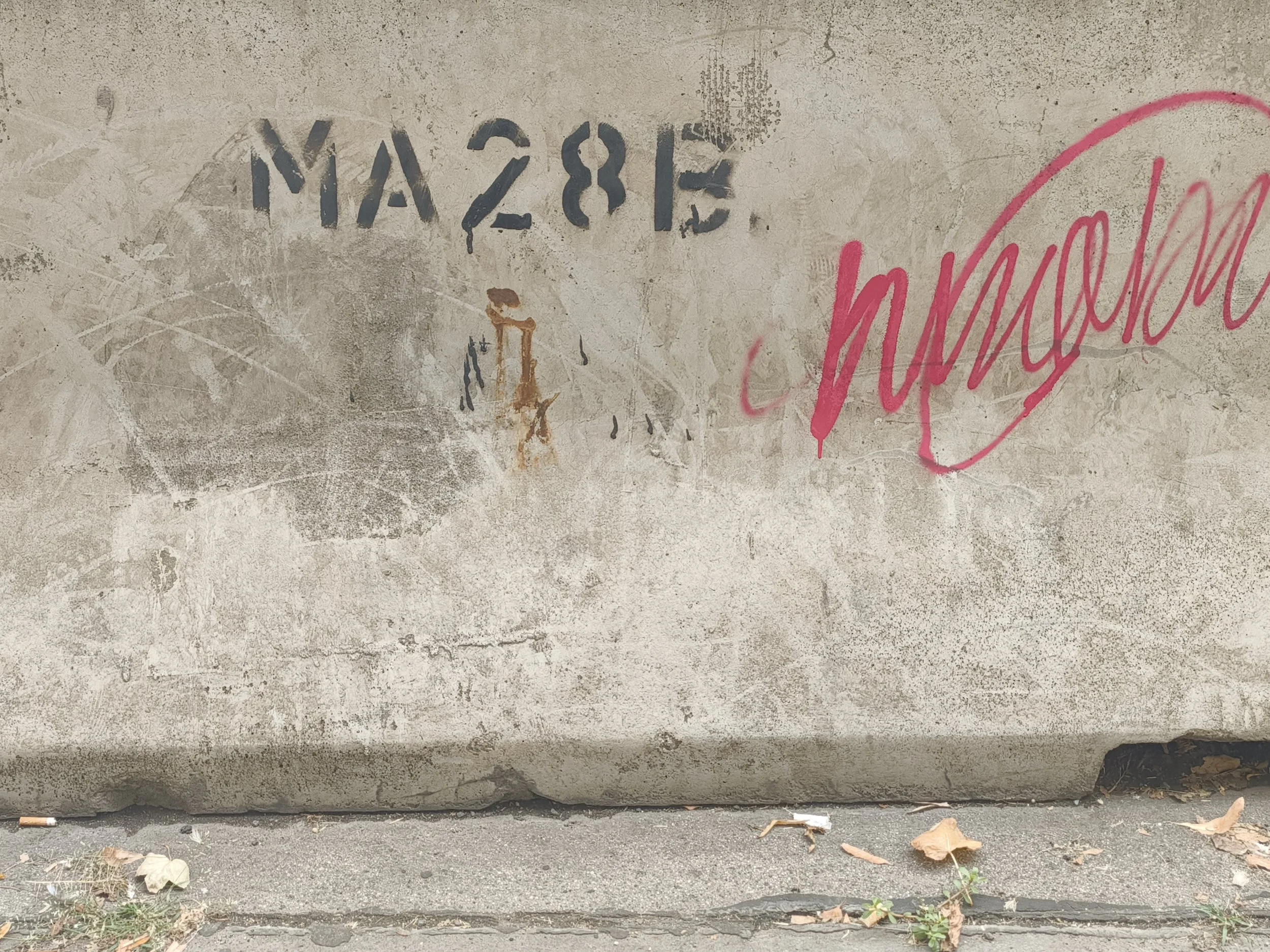
This was not the plan, but what we live is never the plan. I live in English; I tell the people who question me. I even go to therapy, I fuck, I have breakfast and sometimes I dream in broken English. Every year, my English gets worse, and so does my Spanish. “Bye-lingual” is the new approach. Formulaic, repetitive, simplistic language. Vocabulary erosions. To lose and not to earn. I claim ownership of my (linguistic) failure. Gloria Anzaldúa spoke of wild tongues, mine is too coy to be wild. Too frightened to make mistakes but still resistant.
Tina Campt writes, “a refusal to recognize a system that renders you fundamentally illegible and unintelligible”. Would that apply to what I want to narrate as Bartleby—an approach to language and to visa processes? Am I just romanticizing my refusal? How dangerous is it to narrate something as what it is not? Can one refuse the place that one lives in? As a practice, as a continuum, as an identity?
Frida Robles is an artist and curator based in Vienna, Austria. She engages in processes of self-questioning, understanding the personal as political. Her artistic practice varies from public art installations to performances to textual work. She lectures at the Theater, Film and Media Studies of the University of Vienna and is a PhD candidate at die Angewandte.
All images are courtesy of the author.