
THE SILENCE OF THE VOLCANO...
Double-click to edit...
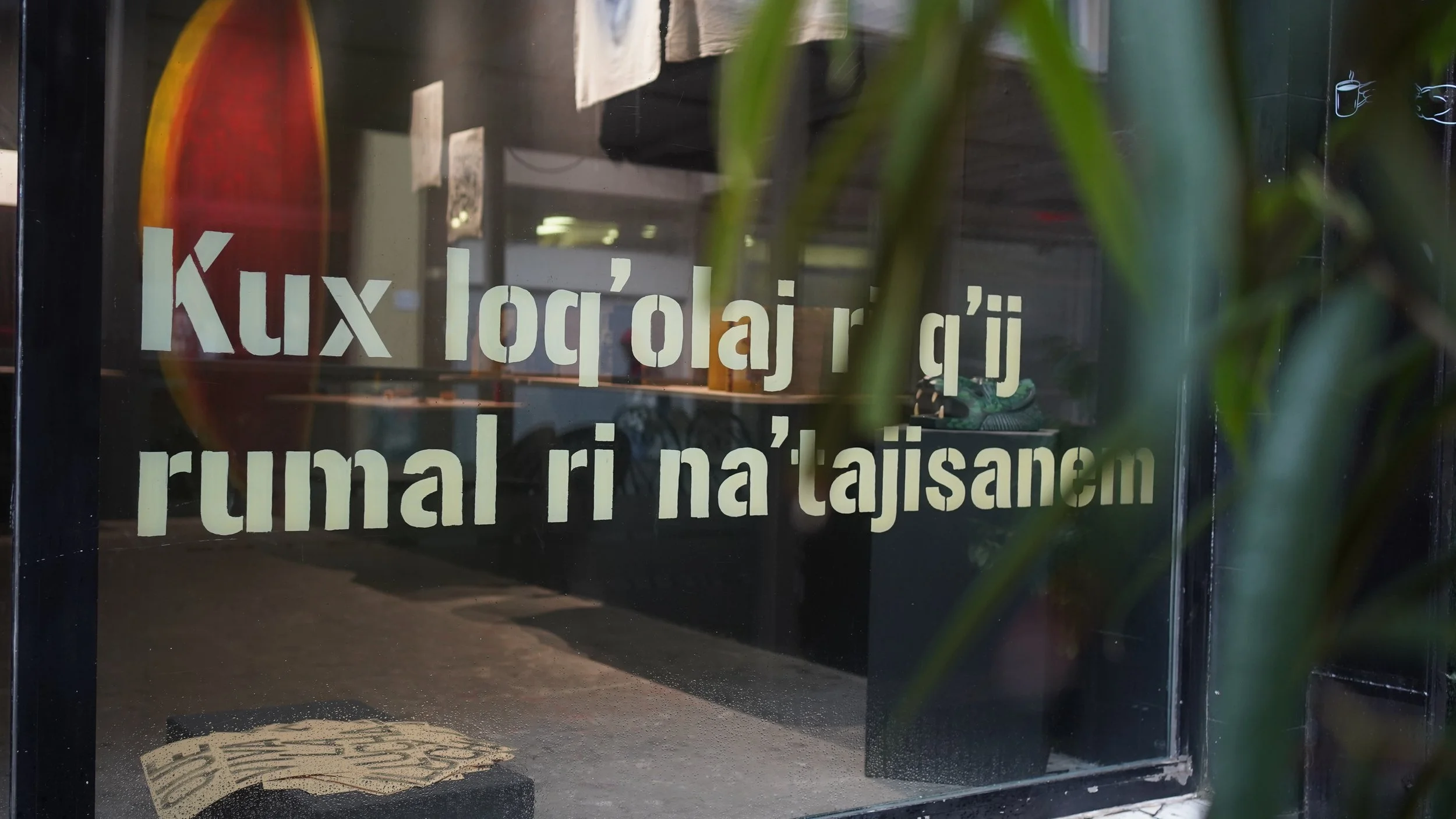
Photo: Miloš Vučićević (Kajmak Media)
-by andrea ancira
“El silencio del volcán
es mi silencio y el de los míos.
A lo lejos se mira sereno, pero no.
Va lleno de fuerza y calor,
es el hocico de esta tierra que es la mía,
siempre al acecho.”
What kind of encounters allow to shelter histories of violence that refuse representation? Can an archive generate affective economies[1] of shared grief—spaces where loss can be held collectively without being flattened? “El silencio del volcán” [The Silence of the Volcano] brought together a group of ten artists from Guatemala who responded through their practices to an archive rooted in experiences of migration, life in hiding, political resistance, forced disappearance, and genocide during Guatemala’s counterinsurgent war (1954–1996), one of the longest in Latin America. Through collaborative dialogue, the exhibition explores the potential of archival work tied to histories of trauma as a practice of adjacency, collective mourning and political imagination.
For over a decade, I have been assembling an archive —an attempt to reconstruct and unravel the fragmented traces of my family’s experience of the war in Guatemala. Though personal in its origins, the archive has revealed itself as situated within a wider, entangled topography of collective history. What at first seemed intimate, even private, has increasingly pointed toward something profoundly collective: a shared landscape where trauma and grief are woven with everyday practices of resistance and re-existencia.[2]
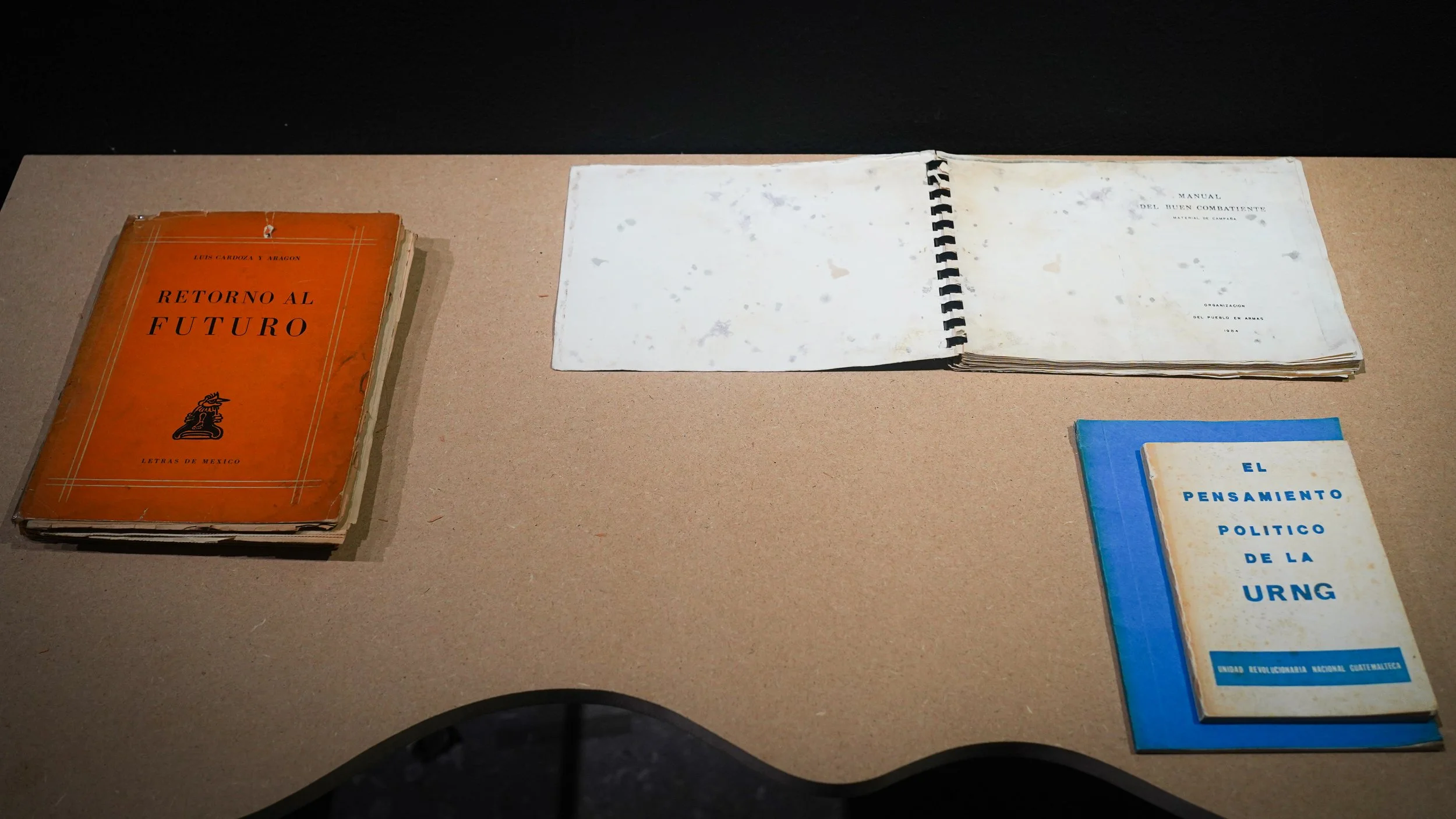
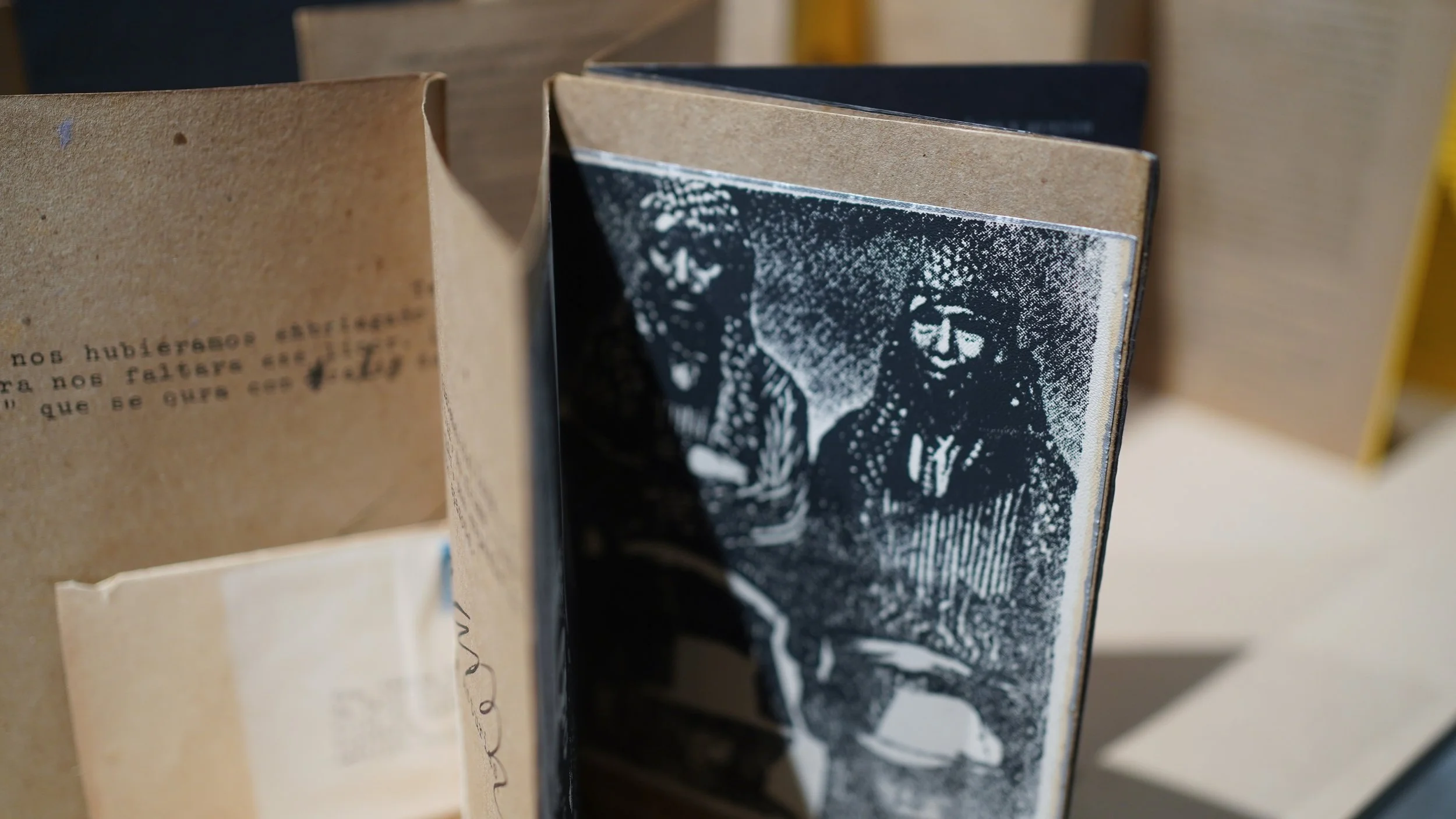
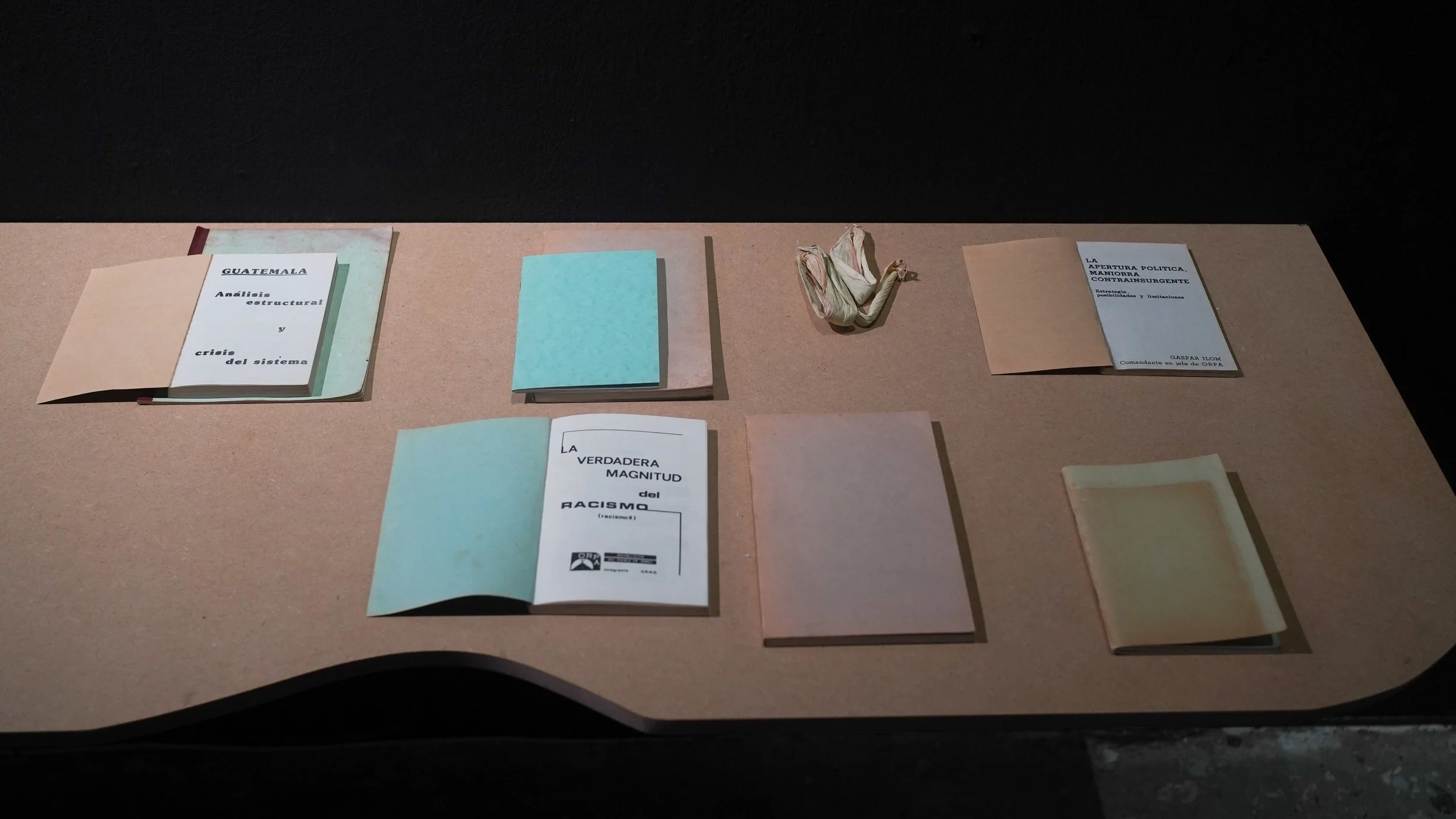
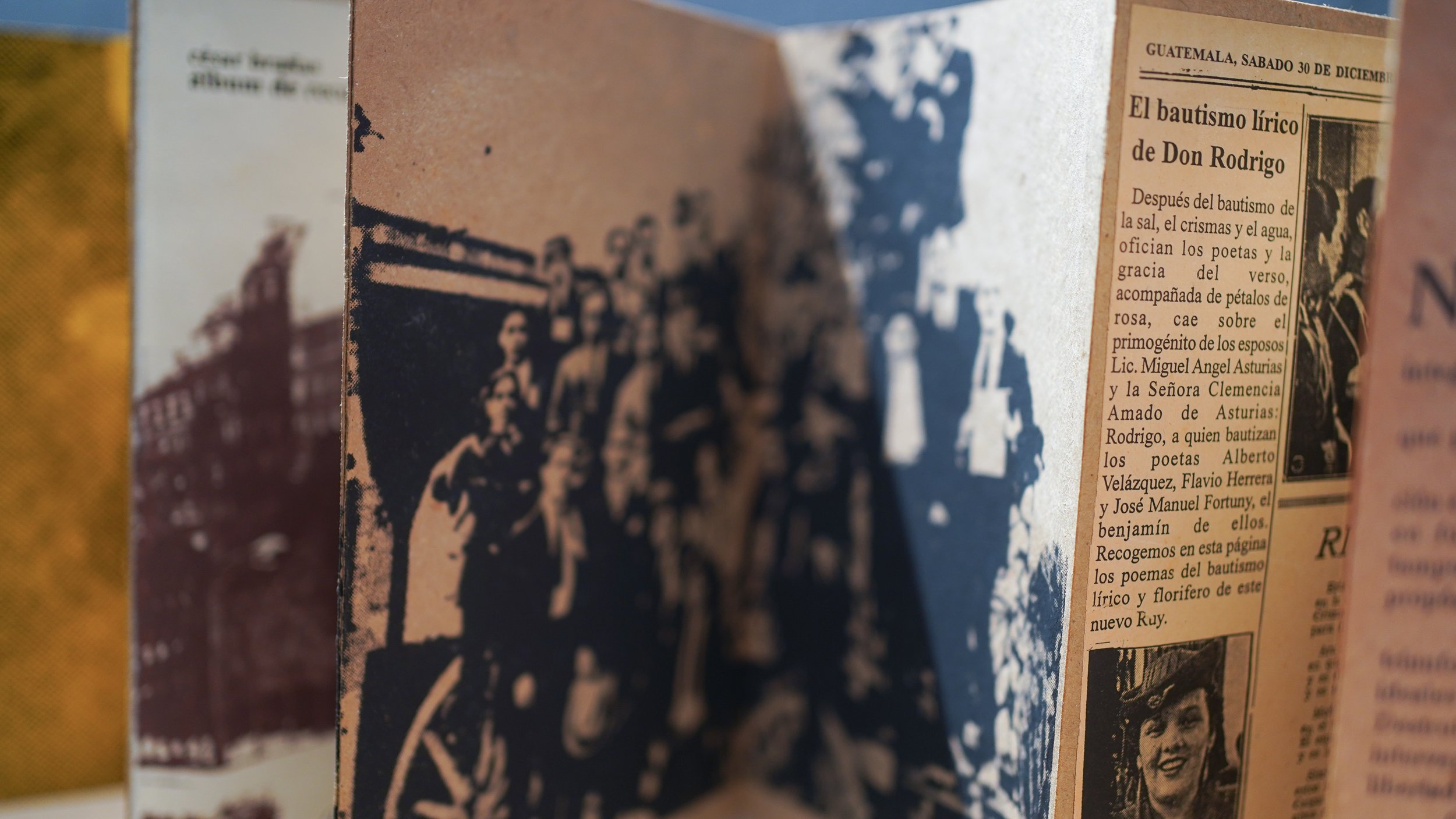
This exhibition was a partial unfolding of the research project “Infinite Rehearsals of Memory: Impossible Archives and Revolutionary Hauntings”. This project foregrounds my family archive, composed of a constellation of unstable objects and materials, as a site of encounter. As its name suggests, it consists of rehearsals of memory, in which I return again and again to objects from this archive as a way to mourn alongside others with similar or divergent experiences of the war. The project examines how this memory practice creates a proximity that enables alternative modes of relating across different experiences and positionalities. These rehearsals engage with memory through what Tina Campt calls adjacency: an affective practice of placing one’s own story in relation to others’, not in spite of difference, but through it.
As the guiding methodology of this work, adjacency acknowledges the impossibility of fully translating another’s experience and instead invites to stay with the discomfort of divergence, to confront our complicities and contradictions, and to work toward forms of connection that do not ignore the asymmetries and tensions inherent in relational encounters.
The works presented in the exhibition shared a common starting point: each was a response—either created specifically for this project, as with B’alam Waykan, Gabriel Rodríguez Pellecer, Jeff Can’ Xicay, Edizon Cumes, Mena Guerrero, and Edgar Calel, or drawn from earlier works, as with Regina Galindo, Marilyn Boror Bor, and Esvin Alarcón Lam. All the artists respond to a text written by Ana, a freedom fighter and my brother’s mom. “The Names of the Camps,” narrates the experiences that named some of the camps of ORPA[3], the guerrilla front in which she participated. The text was recovered and published in the late 1990s by Taller Leñateros a few years after she was killed.
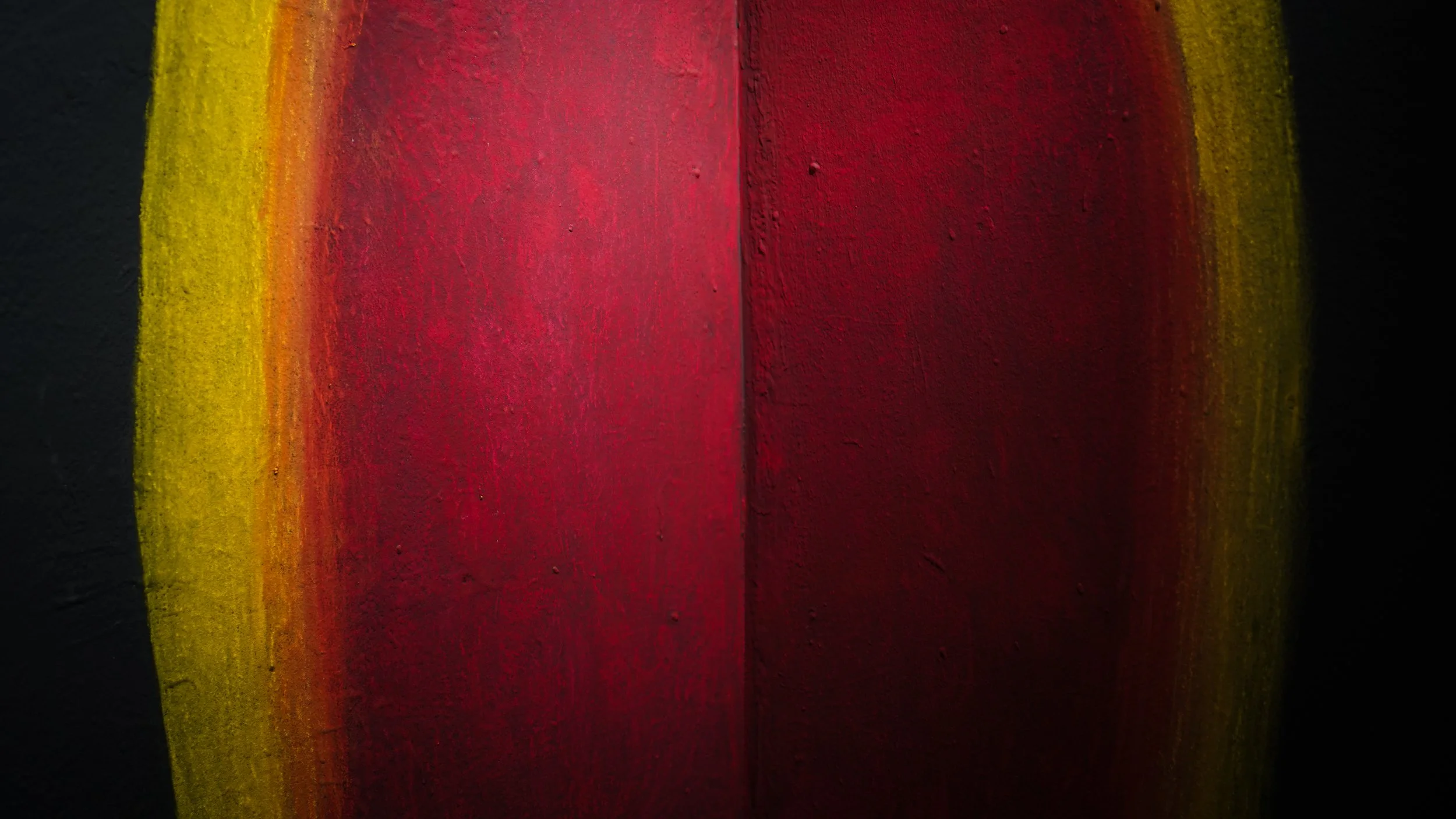
Ana’s text sketches a cartography of experiences and significant moments shared by a group of people who, during the war, made the mountains and volcanoes their home. This “map” is not static; rather, it reveals the ongoing mutability of territories and how those who inhabit them shape and transform space through presence, movement, perception, and creation. The memories contained in the text produce a geography that challenges cartographic representations of space. In doing so, it questions the idea imposed by modern nation-states: that we must draw physical borders in order to narrate ourselves within a territory. By generating a relationship to space defined by memory and affect, this text outlines and embraces traces and remnants of what is unreadable or has been erased in dominant accounts of the war in Guatemala. Unlike the restorative logic that seeks to stitch the past into a coherent narrative, the opacity and affective resonance of Ana’s text offer a map-text that opens up and mobilizes potential stories that allowed me to rehearse adjacent memories and mournings with others. It is a map that can be traversed by anyone whose own histories, losses, or longings find echoes in its traces.
In this collective rehearsal of memory, shared and differentiated stories met, overlapped, and strained against each other. The works activated the archive as a site of fabulation, documentation, co-construction, and symbolic negotiation. In doing so, these rehearsals challenge the colonial-imperial logics embedded in traditional archives, revealing the violences underlying dominant narratives and opening pathways through affect, storytelling, and relation. The title of the exhibition evoked the power of flickering memories that are lurking. The silence of the volcano is latent; it is the symptom of what remains unresolved. Beneath the surface, memory and resistance persist, like a force that haunts both history and the present.
Notes
[1] Sara Ahmed uses the term 'affective economies' to describe how emotions bind subjects together into collectivities, taking on a life of their own through circulation and exchange.
[2] Re-existencia is a term that refers to forms of political resistance that, while opposing systems of oppression, simultaneously cultivate from the ground up other ways of living—ways that affirm life and community beyond the frameworks of the State, political parties, and representative politics.
[3] ORPA (Organización del Pueblo en Armas) was one of the four main guerrilla organizations active during Guatemala’s counterinsurgent war. Founded in the late 1970s, it emerged from earlier revolutionary movements and focused on mobilizing Indigenous communities in the western highlands. ORPA aimed to dismantle systemic racism and poverty, playing a key role in the broader guerrilla coalition, the URNG (Unidad Revolucionaria Nacional Guatemalteca).
andrea ancira (Mexico City, 1984) is an editor and curator. Her research is situated at the crossroads of archival practice, editing and translation as devices to probe memory, identity and the power structures that underpin historical narratives. Since 2017, she has co-founded the feminist independent publishing house tumbalacasa ediciones. She has curated the exhibitions “Estallar las Apariencias” at Centro de la Imagen, CDMX (2018), “Réplicas: Apuntes sobre una historia material” at Ex Teresa Arte Actual, CDMX (2018), “Éclater les Apparances” at Villa Vassilieff, Paris (2019), “Escucharnos Decir” at Atrio de San Francisco, CDMX (2020), “Disorienting Plans” at Aronson Gallery, New York (2022), “Take-Away Archives” at Interference Archive, New York (2023) and “Tierra Condenada” at Spanish Cultural Center in Mexico City (2024). As a writer and researcher, she has collaborated with institutions such as Museo Universitario del Chopo, Museo Universitario de Arte Contemporáneo, Casco Art Institute, SOMA, The New School, La Escuela, Beta-Local, Pagoda Imaginaria, South as a State of Mind, CAC Brétigny, Kunstlicht, and K-Verlag. She is currently conducting her PhD research at the Academy of Fine Arts in Vienna.
Images: Installation photos of El silencio del volcán… // The Silence of the Volcano… exhibition, curated by andrea ancira, at Improper Walls, 2025. Photo: Miloš Vučićević (Kajmak Media)