
(part of bal’26)
Through a slow, observant lens, the film programme invites viewers into liminal spaces imbued with a sense of freedom, waiting and the passage of time. From a fairy woman in rural Serbia and a lighthouse keeper on a small Estonian island to the residents of a trailer park – these stories expose the fragile boundaries of the worlds we inhabit.
Duration: 37 min.
Films
Pagirnis
dir. Anastasija Pirozenko, 2021, 22min.
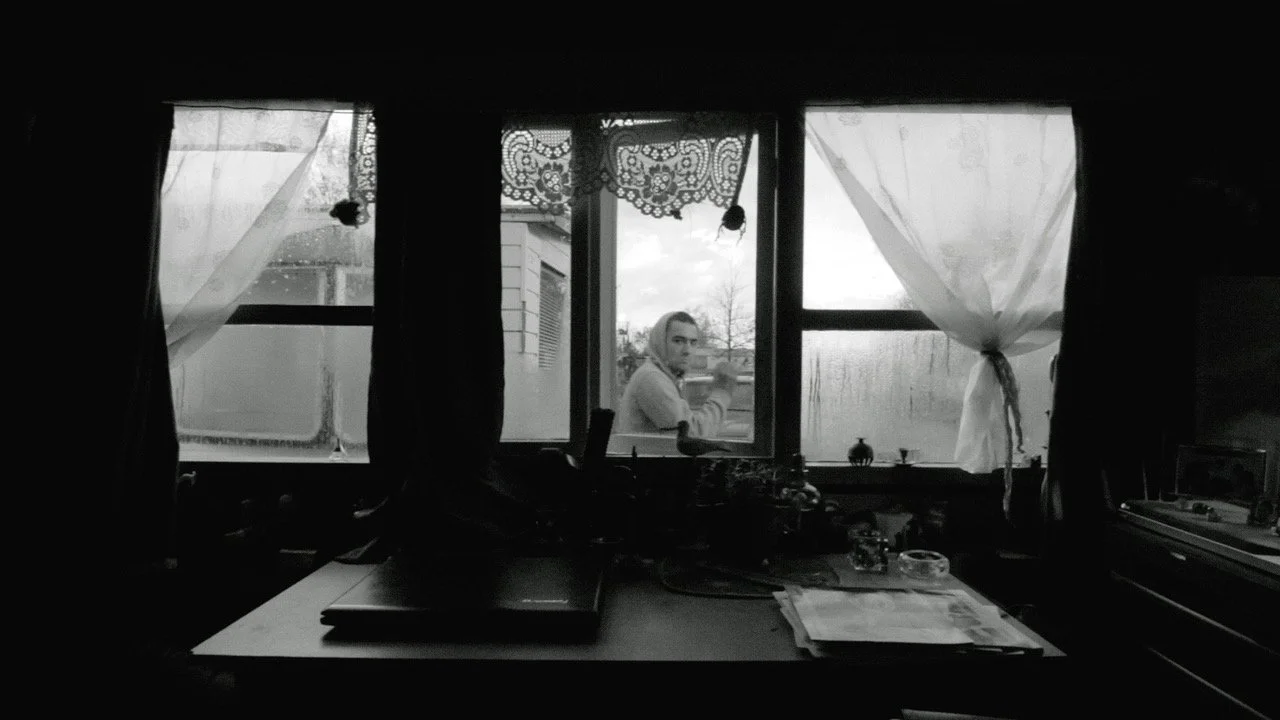
They are known as the city nomads. They live in a trailer village on the outskirts of Amsterdam and are viewed as poor, low-skilled and addicts. Some of them came here out of necessity, being misfits in our society or simply because of idealistic views. For them, this self-established village gives a sense of freedom and a possibility to build their lives the way they want it. But the eerie feeling of temporality of this squatted place is always present. “One of the biggest illusions we live with is that we are going to make it,” – says one of the trailer park inhabitants. But there is much more to life in this camping village. People’s dreams, philosophies, destinies are a testimony of the effects of late capitalism on everyday life, from which the old deities have been disappearing. The film juxtaposes Lithuanian mythology on household deities and the current situation in the Netherlands, where the housing crisis is pushing people to live on the outskirts of the city. The story slowly builds up through the encounters with the inhabitants of this unique place. https://www.anastasijapirozenko.com/pagirnis
I Have A Song To Sing You
dir. Eluned Zoë Aiano, Alesandra Tatić, Greta Rauleac, 2018, 6min.

As a child, Ivanka was chosen by fairy women for the special task of entering the realm of the dead to discover the future. As an old lady, the spirits have left her, so how does she navigate between the two worlds now? This experimental short documentary seeks out Ivanka, a woman who lives in rural Eastern Serbia and who spent most of her life falling into trance to enter the realm of the dead and learn about the future. Ethnographic archive materials from her days as a prophet are interwoven with contemporary footage shot now that the supernatural forces have left her. As such, the film plays on dualities of time and ontology to explore how this experience has affected her relationship to the landscape that surrounds her, while engaging in a meta discourse on the digital nature of film and visualisation of memory. The film was funded by the London Short Film Festival as part of their “With Teeth” scheme to support non-conformist independent filmmaking.
Mother Mare
dir. Elisa Chiari, 2024, 9min.
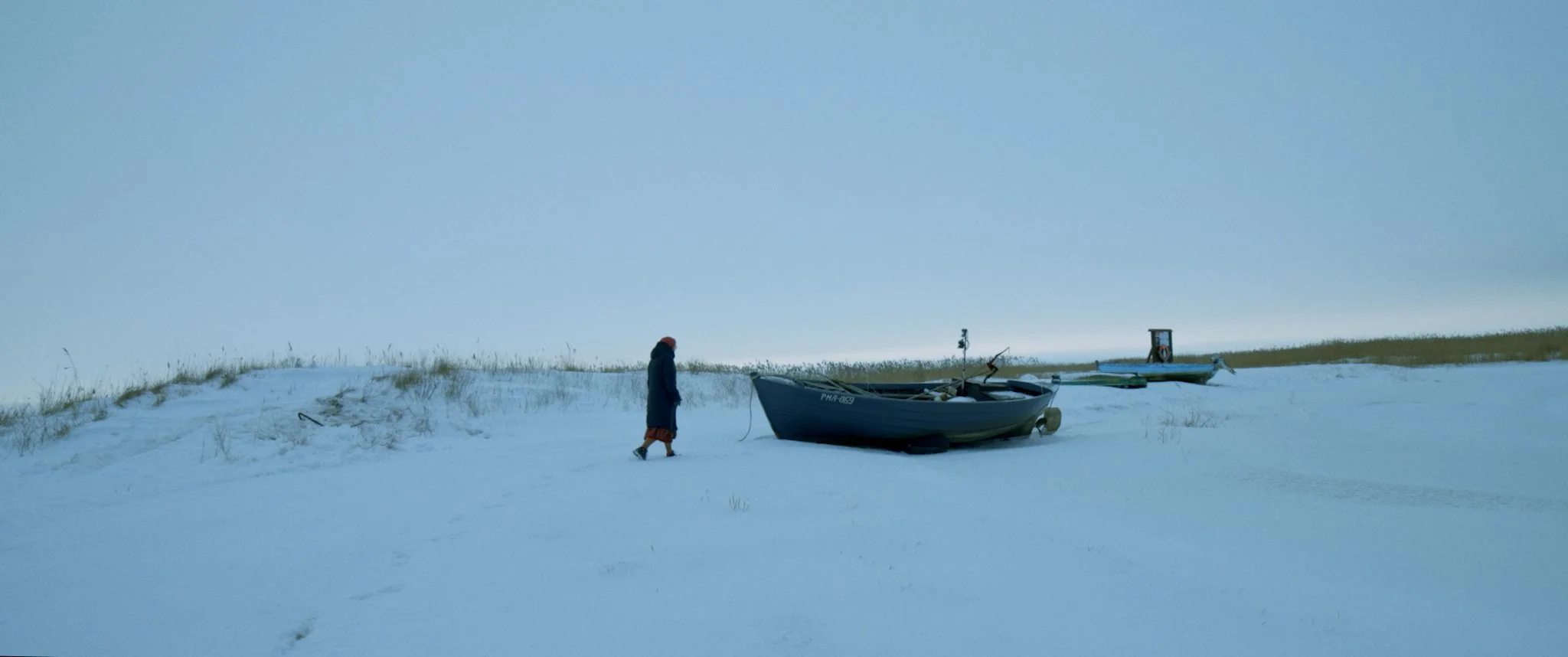
Mare is the lighthouse keeper of Kihnu, a small Estonian island off the Baltic Sea that has been described as Europe’s last matriarchy. While the men are away at sea during long periods of time, it is the women who care for and govern the land. What will be the future of a place that has always been waiting for someone to return?
bal’26: Dismantling the Promise
bal’26 thematic focus looks into resistance against power structures. With the title Dismantling the Promise, the program reflects on the consequences of power agreements and connections, as well as the missed opportunities for solidarity, care, and dissent when viewed from a feminist standpoint. It is an intentional look back at the power structures that constrain the autonomy of marginalised bodies and their landscapes of physical territories, social spaces, and embodied environments—turning back toward these structures, using their own tools of language, technology, and speculation against them.
The bal’26 program is perceived as an exhibition which is multilayered and denies the common structure by bringing together artworks (including research presentations) in different formats that unfold over time. Exhibition Ghost Town by forms a constant presence, while additional works: short movie (The City That Has Peace by Petra Matić), a performance (RADIO GLAS DRINE by Vildana Hermann) , a performative reading by Collective Dreaming , publication presentation (Body as an Archive: Performative Art Practices in Postwar Kosova by Anyla Kabashi and Renea Begolli) and a symposium are introduced at different moments. These function independently, yet remain in dialogue with the Ghost Town creating a shifting field of relations across the duration of the exhibition.
The selected presentations in the symposium cover problematic decisions regarding transregional via-politics of so called Baltic Sea – Black Sea – Aegean Sea Corridor stretching from the Baltics to the Balkans (Corridor Limbo by Paula Veidenbauma); investigate how weaponised digital tools are recognised and reclaimed by feminist artists (Feminist Data as Resistance: Algorithmic Bias, Bodily Autonomy, and Digital Feminist Resistance in the Post-Yugoslav Balkans by Ana Marinković), expose how city scapes and eco systems co-exist and are disrupted by political governance (Ecologisation of Architecture by Aljaž Rudolf), and explain how Aesopian language influenced the transgenerational somatic effects of repression (Aesopian language by Rūta Junevičiūtė).
During the opening of the exhibition, the bal’26 publication will be presented with contribution by Helena Aadli, Renea Begolli, Likana Cana, Hana Čeferin, Anton Goncharov, Vildana Hermann, Rūta Junevičiūtė, Anyla Kabashi, Kroplya, Diona Kusari, Ana Marinković, Petra Matić, Milica Popović, Justina Špeirokaitė, Saša Tatić, and Paula Veidenbauma.
Curated by Justina Špeirokaitė
Curatorial and editorial team: Merete Väin, Ajda Ana Kocutar, Lara Mejač, Urtė Špeirokaitė, Miloš Vučićević
Supported by BMWKMS, MA7, 15. Bezirk, Lithuanian Council for Culture, and the Lithuanian Embassy in Vienna
bal is a transdisciplinary comparative project exploring the artistic and cultural landscapes of the Baltic states and the post-Yugoslav region. Combining academic research, artistic practice, public discussion, and critical discourse, the project challenges homogenising views of Eastern Europe and foregrounds diverse identities and experiences. Through an intersectional perspective, bal examines how historical and contemporary transformations shape the lives of women and others affected by intersecting forms of marginalisation.