
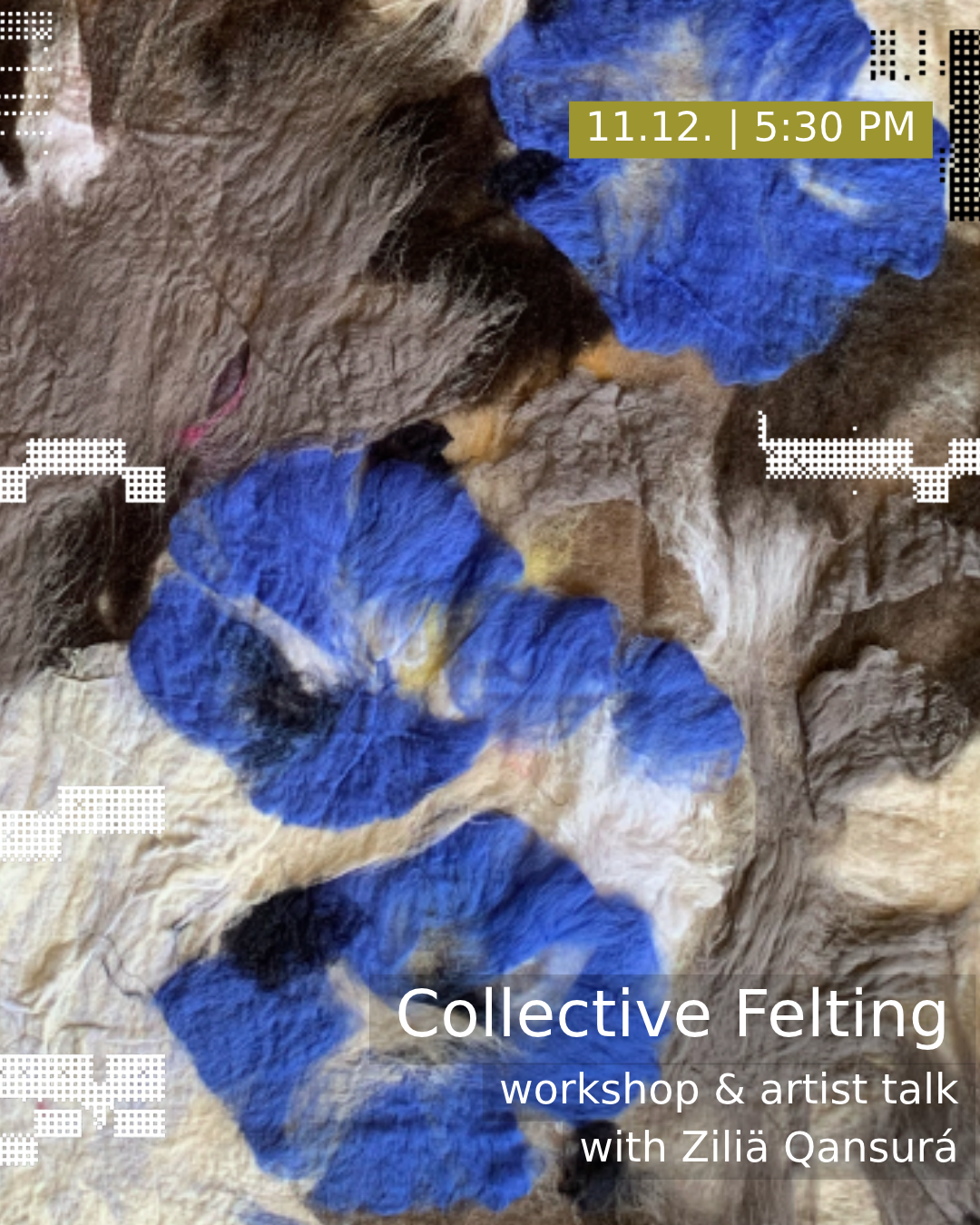
Collective Felting Workshop
communal process of felting & artist talk
By Ziliä Quansurá
Join this hands-on workshop with the artist Ziliä Qansurá exploring the meditative and communal process of felting. The workshop is accompanied by a talk by the artist. Using hot water, soap, and shared labour, participants will bind fibres into dense forms that echo bodily structures and landscapes of memory. Rooted in Bashqort craft traditions, the workshop reflects on themes of identity, migration, and exile, while embracing resilience, transformation, and belonging. No experience is required—just curiosity and a willingness to create something collective from fragments, gestures, and stories.
About the artist
Ziliä Qansurá is a Bashqort multidisciplinary artist and researcher based in Vienna. She is exploring how Indigenous agency manifests itself as an autonomous force — in contrast to how neoliberal institutions often frame it exclusively as a response to various types of oppression. She is practicing across sculpture, installation, performance, theater, and more, she often works with felt, native plants, textiles, electronic waste, etc., putting their physicality and animacy into a historical context. Ziliä mixes this context with how these materials are presented today, and how they relate to the artist’s own body — or any other body that holds traces of racialization, marginalization, etc. Growing up in Bashqortostan, where she developed an attention to how space, movement, and storytelling shape experience, Ziliä uses these traces as a somatic map, and a tool for healing — a form of knowledge that brings together past and present and can inform a different, sovereign future.
For registration please fill in the registration form
*Limited spaces
The workshop is part of counter-document curated by Rosa Nahid Bertsch & Gabriel Zúñiga
Supported by BMWKMS, MA7, 15. Bezirk
The exhibition and public programme is the culmination of the Curatorial Laboratory, a four-month paid mentoring programme, conceived as a model for more equitable curatorial practice, offering emerging curators who are systematically excluded from institutional structures the chance to gain experience in a supported, non-gatekept environment.