No one’s life is ordinary.
Interview with Diana Tamane by Merete Väin
Diana Tamane’s works have in one way or another been documenting the poetics of the everyday. Born in Riga, Latvia, when it was still part of the USSR, and currently living in Tartu, Estonia, Tamane has brought to life experiences from different generations of her family, mirroring various societal changes and processes. However, her observations and stories reveal themselves to the viewer in their own manner, unhurried and unbothered – posing a kind of dare to today’s short attention span.
(The interview took place in July 2023.)
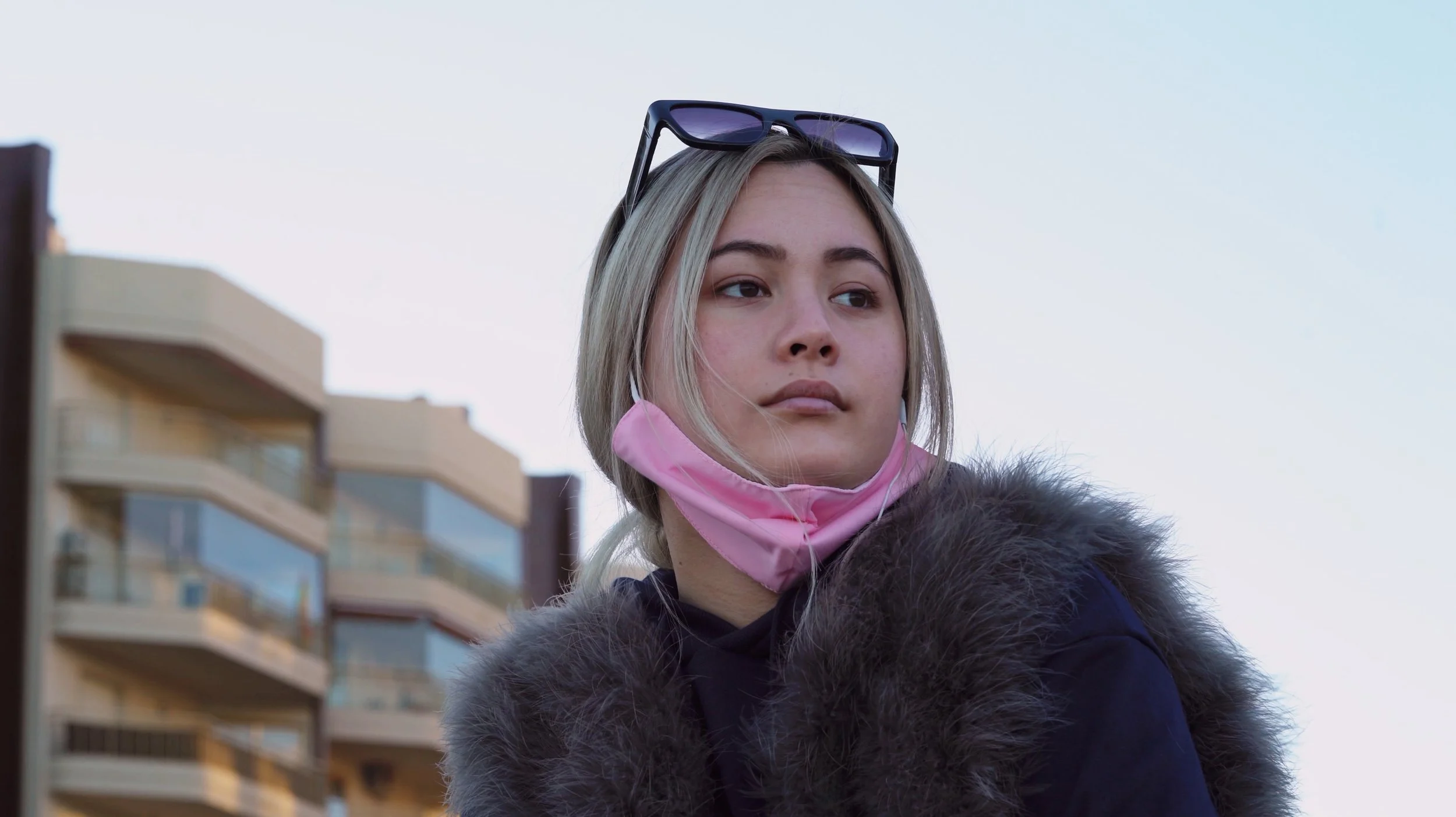
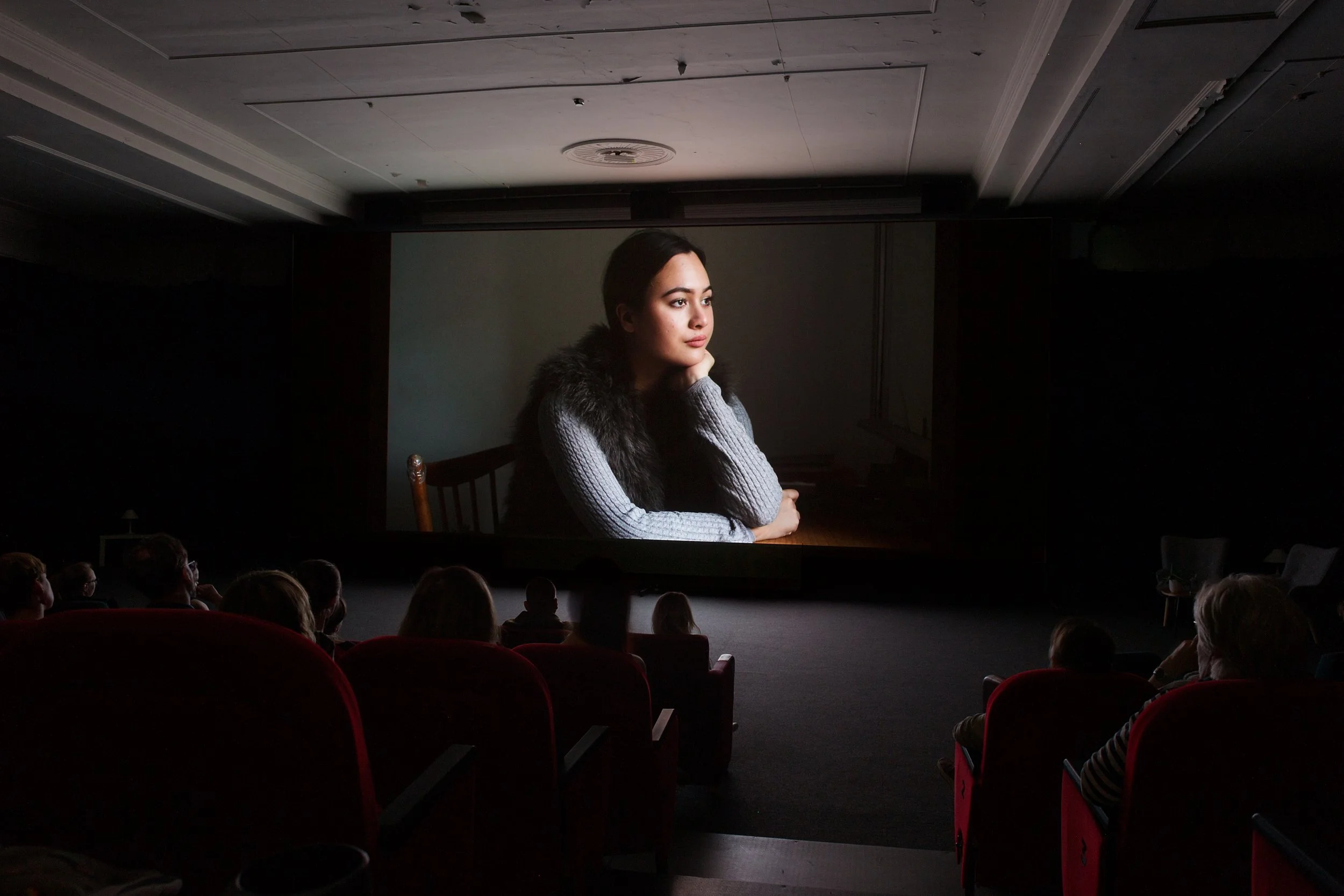
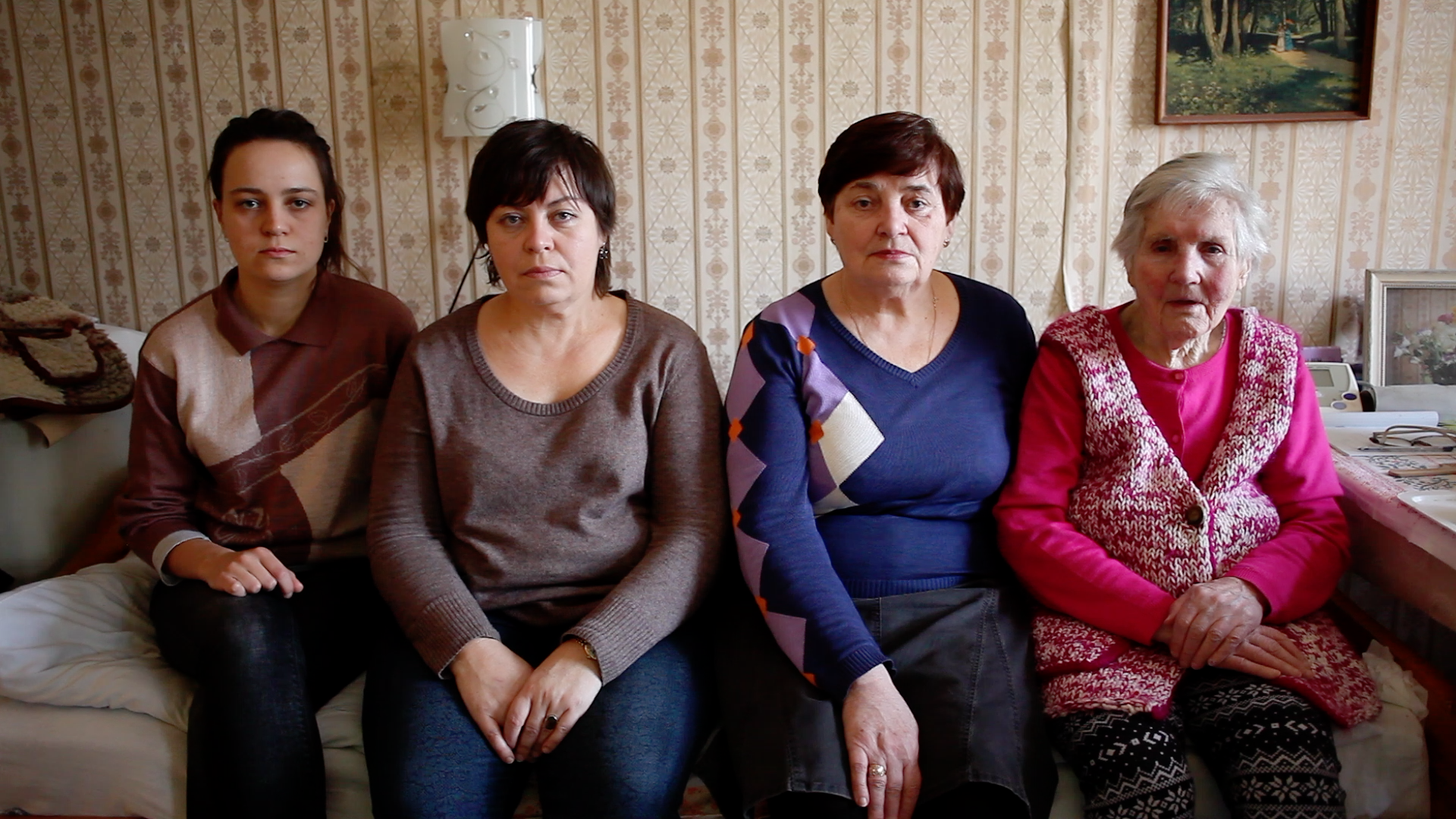
Your video work “Family Portrait” is an ongoing series of annual portraits of women in your family. It is currently (until 15.10.2023) exhibited in the Latvian National Museum of Art in Riga, at the exhibition “Don’t Cry! Feminist Perspectives in Latvian Art: 1965–2023”. How does it feel for you to see your work in this framework?
There are 48 artists at this show. Works that were chosen are by and about women, even if they are not directly feminist. This framework feels good. Though I was a bit afraid that it would be presented through a victimised position, I felt rather empowered.
You said in a previous interview that you don't always welcome your art labelled feminist, because it might take away the focus from other layers in your work. Have you experienced different reception to your art depending on these labels or even the location where it was exhibited?
I think it’s good to have as few labels as possible, so the viewer has the freedom to relate to the work from their own experience. But I am interested in making works and telling stories that would empower women. People can relate to my art, because they all have families, and have experienced changes in the system or borders in one way or another. It is beautiful and encouraging to see when people connect to your art. For example, in Budapest, people told me that the story of "Flower Smuggler" felt like their own. (“Flower Smuggler'' is a story about Tamane’s grandmother being accused of smuggling flowers over the Latvian/Russian border in 2015. She intended to take the flowers to the grave of her grandfather in Pytalovo, previously known as Abrene. As Abrene was annexed to the USSR in 1945 and has since remained part of the Russian Federation, nowadays a visa is required to enter, Ed.)
Feminism and feminist art have many different faces. If you try to pin down the feminist essence of your approach, what would it be?
When we fight against patriarchy, we might be doing it using the tools and approaches of that very same system – this is where the problem lies for me. I want to create in a feminine way: by that, I don’t mean the gender, but more the energy like yin and yang. It is about slowing down, being more in tune with nature and other beings, honouring the cycles – whether they are seasonal or cycles of our bodies – and being more balanced in the system. It’s often said that contact with nature is lost, but it is time to be reminded that we ourselves are nature.
That way, your artistic expression may be one of the languages to step outside the patriarchal discourse, or at least to challenge it?
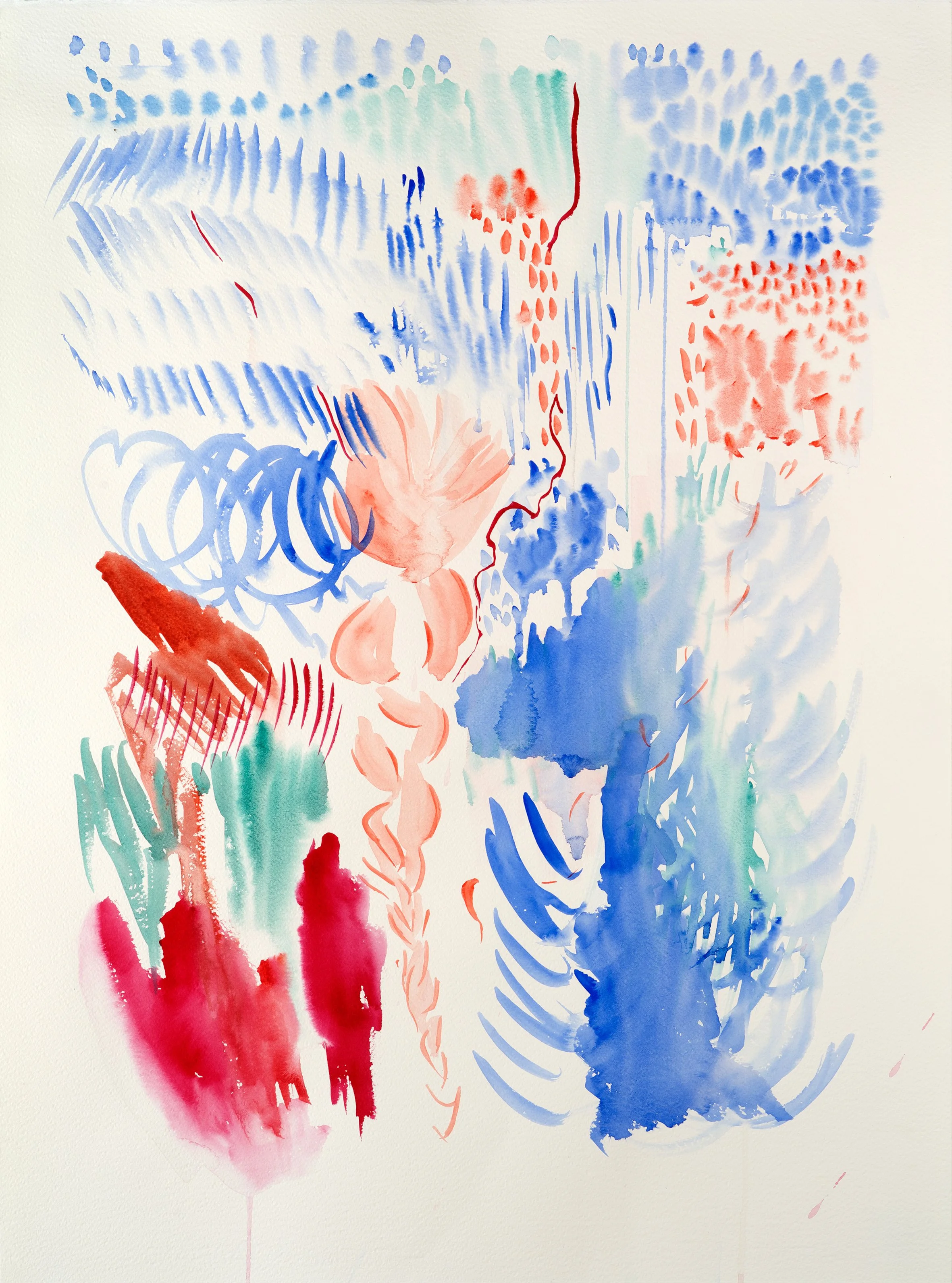
I guess you could say that. I was not always conscious of breaking these patterns. In a way my previous works are conceptual, but now I'm moving towards more intuitive and vulnerable. I started using watercolours, which is a new medium for me. I would like to manifest a more feminine approach in every aspect and step of the process and the production.
Much of your art deals with poetics and the beauty of the ordinary. Do you remember when you started noticing this potential around you?
It is a reaction to the fast rhythm we have around us – in daily life there is constantly a lot of information coming in from the environment. I love to go for walks into nature, sit by the river and see how the water and the light move. My purpose is to observe and to be present, to slow down and to take time for the ordinary. Through my art, I invite the viewer to look at their own ordinary and also notice the beauty there. If we are running, we are not really feeling or seeing things.
However the space in my works is very charged, like in "Family Portrait" or "Under the Same Sky" (Tamane’s documentary film about three generations of women in a multicultural family, Ed.) If you would meet one of these families in the street, you would think it's just another ordinary family – and in a way, it is – but at the same time I want to show that no one's life is ordinary.
A previous exhibition, "Within Arm’s Reach" (2020), was based on your mother’s drawings, her visual diary. Curator Evita Goze wrote that by emphasising the ordinary moments and revealing their potential, you are questioning what is considered valuable in the context of contemporary art and art institutions. Is there an aspect of rebellion in your art?
“Within Arm’s Reach" was about giving a voice to someone whose creativity would otherwise not be seen in the art context – in this case, my mother’s, who was working as a truck driver. I am especially interested in stories that keep repeating: seeing that the struggles of today were similar 100 years ago, and they will be the same in the future. Even if the context is different, on a humane basis you still have to deal with the same struggles – psychologically or otherwise. So in a way, it is a little bit of a form of rebellion indeed. My work doesn't try to impress anyone.
How has the reception to your work changed? Were there ever any setbacks?
Definitely. I make art because of a particular feeling or energy. It is there, but not yet materialised. No one sees it yet. It took me many years of consistent work to show the complexity and layers of my family story. There is humour and drama, different struggles and relationships between women in my family. It contains also a comment on art itself, on what is worth being shown or seen. As all these layers intertwine in my work, it took time and patience to develop it. In the beginning, it often felt lonely.
Many of your works are also rich in text. The narration in “Under the Same Sky” has great humour and poetic wordplay. Do you have any dramaturgical support?
There was basically no editing in "Under the Same Sky". I had to leave some topics out though, because I focused more on the relationships and the borders. I just asked for Irina’s (the narrator and the protagonist in “Under the Same Sky”, Ed.) life story: as I was reading it, I was laughing and crying – it was really well written. She also did a great job at recording the voiceover. We had planned two days for recording, but we were done with just two takes! I couldn’t include several wonderful parts, like for instance when they were standing in line from 6 AM to get some books during the Soviet times. They didn't know which books they would receive, but getting to read any book was what mattered!
You are an artist from Eastern Europe, and you also have a certain plurality in your identity. Do you think that identifying through culture of origin is important today? Are these origin labels necessary?
There's a beautiful thought by Krishnamurti: stating that you're Christian, Hindu, European, black or white, is a violent act, because you are separating yourself from the rest of humanity. I have a mixed background and have lived in many countries, so it is of course also difficult for me to have a clear identity in this matter. People will probably always have religions and nationalities, but it becomes a problem when it becomes bigger than humanity, with strict borders. We live in a scary and anxious time, and we must see everyone for their individual story and seek for aspects in which we can relate. I feel that it is my responsibility to search for that.
Did you ever encounter a stereotypical assumption about you as an artist from the Eastern Bloc? Or expectations to deal with certain topics, for example historical trauma?
When I studied in Brussels (2013–2014, Ed.), in the art school I was told not to focus on the family topic, because every artist from Eastern Europe is already doing that. But besides that I haven't had many experiences like that. Maybe that is because I am doing what I am supposed to be doing: working on the family topic! (Laughs) In a way, trauma has always been present in my work, but now it is time to move forward. Trauma can be a powerful tool for many processes, and we have a choice of how to use it.
What do you think about the family topic comment?
I don't agree with it! The art scene is so diverse. But I wonder where this perception was coming from. What do you think?
I think many artists create from their immediate personal experience. No one can experience societal processes in their full complexity, one can approach them only through a personal lens – it is inevitable. Maybe this is where family comes in, and especially the generational aspect of the experience.
But why do you think this is so relevant in Eastern European countries, compared to other regions?
Maybe one reason is the age of the established young artists today? In the Baltics, they were born more or less alongside new freedom. It's part of the story of the generation that is active and influential today.
Also the change must have been such a big contrast. It must have required time to process such a shift – we needed to position ourselves as a society again and see where we belonged. I was born in the Soviet Union, and even though I don't directly remember it, it is present in my system through my parents and grandparents. During my studies in Belgium, my peers seemed to be dealing with somewhat less social or political topics.
It surely is different in societies that have been able to develop freely. There were of course artists who dealt with this trauma back in the USSR, but it might be more visible today simply because artists don’t get censored for it anymore – or worse.
In a way, we are one of the first ones who could make it visible to the world.
With the shift from the family topic towards more intuitive and hand-based mediums you seem to be moving towards more active creation, instead of documentation. Is it giving you more agency or bringing you as an artist more into focus?
Recently an Estonian critic, Indrek Grigor, wrote in his review about my watercolour works that for the first time, I exhibited my own and not the art of my family members. He compared me to a cat with nine lives. And in a way it's true. There is a shift happening in my practice. I want to create from a different place and to be more in contact with the materials I use. I am always looking for ways to break free.
I have always loved stories. Now I'm curious about leaving the story out to see if it will be still enough – or what is enough. All my work is actually about being enough: about simple moments. I am fascinated by artists who can nourish you, using just the smallest gestures. This is what I am now looking for: how much can I reduce, for it to be still enough.